Eartha Kitt: The Timeless Charisma of a Hollywood Icon

Eartha Kitt

Eartha Kitt was a trailblazer, a woman of immense talent and timeless charisma that solidified her status as a Hollywood icon. She was an international star who gave new depths to her chosen craft, showcasing a unique ability to captivate audiences around the world with her distinct voice, engaging performances, and undeniable presence. From her early days in the entertainment industry to her continued success in later years, Eartha Kitt’s legacy is one of resilience, passion, and unwavering commitment to her art.

Born in the rural heartlands of South Carolina on this day January 17, 1927, Eartha Kitt rose from an impoverished background to become one of the most recognizable figures in Hollywood. Her journey was marked by numerous challenges, but she faced each one with admirable courage and determination. Kitt’s unique blend of talent and tenacity propelled her to stardom, making her one of the most successful performers of her time.

Her career spanned six decades and covered a broad array of roles in television, film, and theater. She was a singer, actress, and dancer who could perform in several languages. She is perhaps best known for her sultry rendition of “Santa Baby” and her unforgettable portrayal of Catwoman in the 1960s Batman television series. Despite the passage of time, Eartha Kitt’s performances remain as vibrant and relevant today as they were during her heyday.

Eartha Kitt’s charisma transcended the screen and stage. Her advocacy for equality and civil rights marked her as an influential figure off-stage as well. She used her platform to speak out against injustice, proving that her influence stretched far beyond entertainment. Her enduring legacy continues to inspire artists and activists alike.

Eartha Kitt’s timeless charisma and distinguished career set her apart as a true Hollywood icon. Her life story serves as a testament to the power of resilience, talent, and unwavering determination. Indeed, Eartha Kitt was more than just an entertainer; she was a woman of substance who left a mark on the world.

Curated by Jennifer

Yong Mun Sen’s Malaysian Artistic Identity

Penang Beach Scene (1956) | Yong Mun Sen

Yong Mun Sen, born on this day January 10, 1896, is considered to be one of the founding fathers of modern art in Malaysia. Often referred to as the “Father of Malaysian Painting”, Yong Mun Sen’s artistic identity was shaped by a rich blend of cultural influences and a profound connection to his homeland. His artwork serves as a vivid chronicle of Malaysia’s journey towards modernity, while also preserving the unique cultural heritage and natural beauty of the country.

Born into a Chinese immigrant family in Sarawak, Yong Mun Sen was exposed to a diverse array of cultural experiences from an early age. This multicultural upbringing was reflected in his work, which incorporated elements of traditional Chinese painting, Western Impressionism, and the vibrant colors and forms of the Malaysian landscape. Despite his exposure to international artistic trends, Yong remained deeply connected to his Malaysian roots. His paintings often depicted rural scenes, daily life, and the changing landscapes of his homeland.

Yong Mun Sen’s artistic career spanned across several decades, during which he continuously explored and reinvented his artistic style. Despite facing numerous obstacles, including financial struggles and the turmoil of World War II, Yong remained committed to his artistic pursuits. His perseverance and dedication have left a mark on Malaysia’s art scene.

Yong Mun Sen’s artistic identity is intrinsically tied to his Malaysian heritage. His work reflects the rich cultural diversity of Malaysia and offers a fascinating snapshot of the nation’s evolution. Even today, Yong Mun Sen’s art continues to inspire new generations of Malaysian artists, affirming his significant contribution to the country’s artistic legacy.

Curated by Jennifer

Disneyland’s Fantasyland Autopia Opened On This Day in 1959

Autopia in 1996, before its complete remodel in 2000. The Autopia cars at this time closely resembled the Corvette Stingray. | Ellen Levy Finch

What began as Junior Autopia in 1956, the Fantasyland Autopia ride opened on this day January 1, in 1959 in California’s Disneyland as an expanded version of its predecessor. The attraction was located between the Matterhorn and the Disneyland railroad, in a space now replaced by the modern Autopia and It’s a Small World. The name Autopia was derived from the words “automobile utopia.”

Disneyland’s Fantasyland Autopia is a unique and unrivaled attraction that epitomizes the magic and innovation of the iconic theme park. It is a testament to Disneyland’s commitment to create immersive experiences that engage visitors and transport them into a world of pure imagination and wonder.

Fantasyland is a realm within Disneyland where beloved childhood stories come to life, and Autopia is one of its most popular attractions. This captivating ride offers visitors the opportunity to take the wheel of a miniature car and navigate through a scenic landscape that mirrors a real-life motorway. The Autopia ride, which has been a staple attraction since Disneyland’s opening in 1955, still manages to thrill and delight visitors of all ages.

The creation of Fantasyland Autopia is attributed to the genius of Bob Gurr, a Disney legend who designed most of Disneyland’s ride vehicles. Gurr commented on the early success of the ride, saying, “From Disneyland’s opening day, the Autopia in Tomorrowland was wildly popular. A couple years later, the Junior Autopia was added as a quick capacity addition and specially configured for younger (shorter) guests.” Gurr’s ingenuity is evident in the creation of Autopia, which effectively simulates the experience of driving a car, adding an element of realism to the fantasy world of Disneyland.

Despite its vintage charm, Fantasyland Autopia has evolved over the years, incorporating new features and updates to keep it fresh and relevant for contemporary audiences. The attraction has been revamped several times since its inception, with changes ranging from updated car designs to new track layouts. These transformations are indicative of Disneyland’s continuous efforts to enhance visitor experiences and remain at the forefront of theme park innovation.

Disneyland’s Fantasyland Autopia holds a special place in the annals of the theme park’s history. It stands as a testament to Bob Gurr’s creativity and Disneyland’s ability to blur the line between fantasy and reality, providing visitors with an unforgettable experience.

Jean-Michel Basquiat: From Street Art to Masterpieces

Brooklyn | Jean-Michel Basquiat

Born on this day December 22, 1960 in Brooklyn, New York, Jean-Michel Basquiat, a name that reverberates powerfully in the world of contemporary art, is emblematic of a journey from street art to masterpieces. Basquiat’s artistic prowess transcended the boundaries of conventional artistry, bringing to the forefront a unique blend of neo-expressionism and primitivism.

Basquiat started his journey as a graffiti artist in the Lower East Side of Manhattan in the late 1970s. His street art, under the pseudonym SAMO©, was characterized by enigmatic epigrams that combined text and imagery – a signature style that would later become integral to his canvas work. The transition from street art to more mainstream platforms was a testament to Jean-Michel Basquiat’s undeniable talent and innovative spirit.

As Basquiat’s work gained recognition, he moved beyond the walls of New York City, expanding his artistic lexicon while retaining his unique style. His paintings were unapologetically bold and raw, often featuring skeletal figures and mask-like faces interlaced with cryptic texts and symbolic imagery. These pieces were not just aesthetically arresting but were also deeply insightful, offering commentary on a range of themes from racial inequality to political corruption.

In his short but prolific career, Jean-Michel Basquiat produced an estimated 1,000 paintings and 2,000 drawings. His work has been exhibited globally and continues to be celebrated for its potent mix of defiance, street savvy aesthetics, and profound social critique. Today, his pieces are considered masterpieces and are coveted by art collectors worldwide.

From spray painting on city walls to being showcased in esteemed art galleries, Jean-Michel Basquiat’s journey is a tale of extraordinary resilience and talent. His creative genius has deeply influenced the art world, reaffirming that art is not confined to traditional spaces but can emerge from the most unexpected places.

Curated by Jennifer

Soviet Film Wednesday: The Night Before Christmas

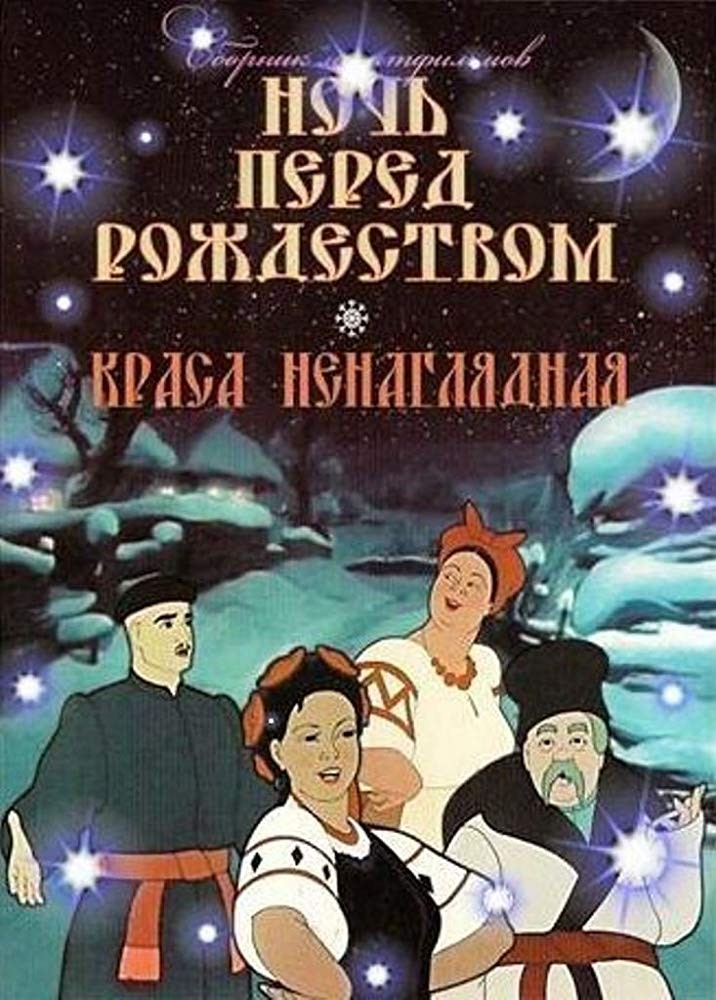
The Night Before Christmas Poster

The Night Before Christmas (1951) was directed by the prolific Soviet animation duo of Valentina Brumberg and Zinaida Brumberg, who were also known as the “Brumberg sisters” as well as the “grandmothers of Russian animation.” Some of their most well known films are Little Red Riding Hood and Ivashka and Baba-Yaga.

Not your typical Christmas story, it begins with the night sky, a flying witch, and the devil stealing the moon so he can wreak havoc across town under the cover of darkness and take vengeance on the town blacksmith, Vakula, who created a famous painting of the devil being defeated.

The Night Before Christmas

Meanwhile, Vakula is in love with Oksana, and spends the night searching for the perfect pair of slippers for a gift to his love, and he eventually enlists the aid of a wizard and the devil to reach the Empress for the slippers.

The film was based on Nikolai Gogol’s tale of The Night Before Christmas, and was made in Moscow’s historic Soyuzmultfilm studio, which also released Yuri Norstein’s Seasons (1969) and Hedgehog in the Fog (1975). The creators used a technique called rotoscoping, or “Éclair” in the Soviet Union, which involves tracing from frame to frame to create smooth action scenes.

Subtitles are available by clicking the CC button at the bottom of the screen.

Beating to a Different Drum: The Lasting Appeal of ‘The Little Drummer Boy’ by Rankin/Bass

The Little Drummer Boy

First airing on December 19, 1968, The Little Drummer Boy, an animated television special produced by Arthur Rankin Jr. and Jules Bass, has long been a staple in holiday television programming. Its timeless appeal transcends generations, making it a beloved classic that continues to captivate audiences worldwide even after more than half a century since its initial broadcast.

The Little Drummer Boy

The charm of The Little Drummer Boy lies in its simplicity and the universal resonance of its narrative. The story, based on the 1941 song by Katherine K. Davis, tells the tale of a young Jewish boy named Aaron, who, having nothing to offer the newborn baby but his drum, plays his instrument as a gift. This poignant tale of humility, generosity and the power of music has touched hearts all over the globe, making it one of the most enduring Christmas specials of all time.

Under the expert direction of Arthur Rankin Jr. and Jules Bass, who were known for their innovative approach to stop-motion animation, The Little Drummer Boy was brought to life with an unprecedented level of detail and depth. The intricate sets, painstakingly designed characters, and beautifully shot scenes combined to create an immersive world that drew viewers in and made them feel a part of the story. The result was a piece of television history that has stood the test of time, largely due to the tireless efforts of Rankin and Bass.

The Little Drummer Boy stands out in the Rankin/Bass portfolio not just for its technical brilliance but also for its emotional depth. The narrative tugs at heartstrings as it explores themes of loss, redemption, and unconditional love. It’s a story that resonates with audiences young and old, making it an enduring favorite among holiday television specials.

The Little Drummer Boy is a testament to the timeless appeal of good storytelling combined with technological innovation. Despite being over five decades old, it continues to beat its own unique drum, capturing the hearts and imaginations of viewers during each holiday season. Its enduring popularity is a testament not just to the creative genius of Rankin and Bass but also to the universal appeal of its simple yet powerful message: that sometimes, the most humble gifts are the most precious ones.

Soviet Film Wednesday: Alexandr Petrov’s Coca Cola Sundblom Santa

Alexandr Petrov’s Coca Cola Sundblom Santa

To celebrate the season, here’s a vintage style Christmas Coca Cola ad by the Academy Award-winning, Soviet born animator Aleksandr Petrov.

The commercial was created in 2001, and was based on Haddon Sundblom’s jolly Santa illustrations, which first debuted in 1931 Coke ads.

Signs of America: Penguin Point

Elkhart, Indiana – February 19, 2021: The entrance and mid century sign at a vintage Penguin Point drive-in chain. | Logan Bush

Penguin Point, a notable drive-in restaurant, has long been a cornerstone of Indiana’s rich culinary culture. Established in 1950, the restaurant has a deep-rooted history that is interwoven with the evolution of Indiana’s food service industry. Over the years, Penguin Point has cultivated a reputation for its high-quality food and unique customer service experience.

This drive-in restaurant has managed to retain its nostalgic charm while adapting to the changing tastes and preferences of its patrons. It serves a diversified menu consisting of classic American comfort foods, including burgers, fries, and its famous tenderloin sandwiches. Patrons also rave about their chicken, salads, and their kid’s menu that offers something for the whole family.

Penguin Point’s success can be attributed not only to the quality of food it serves but also the ambiance it provides. The drive-in feature offers a unique dining experience that harks back to simpler times, creating an atmosphere of nostalgia that customers appreciate. This successful blend of quality food, excellent service, and a distinctive dining experience is what sets Penguin Point apart from other restaurants in Indiana. Its long-standing history is a testament to its ability to cater to the evolving needs of its customers while staying true to its original charm.

Signs of America: Blue Swallow Motel

Tucamcari, New Mexico – May 6, 2021: Close up of the Blue Swallow Motel neon sign, a famous classic Route 66 motel | melissamn

The Blue Swallow Motel, located in Tucumcari, New Mexico, is an iconic establishment that holds a significant place in American history. Nestled on the historic Route 66, this motel has been a beacon for weary travelers for over eight decades. The Blue Swallow Motel first opened its doors in 1939 and has since become a symbol of the classic American road trip.

The history of the Blue Swallow Motel is deeply intertwined with that of Route 66. In the mid-20th century, Route 66 was the primary highway connecting the Eastern and Western United States. The Blue Swallow Motel, with its neon sign and distinctive blue swallow bird logo, quickly became a popular rest stop along this busy thoroughfare. Its unique charm and hospitality catered to thousands of travelers traversing Route 66, making it an integral part of the road’s lore.

Today, the Blue Swallow Motel serves as a nostalgic reminder of Route 66’s glory days. It continues to operate in Tucumcari, attracting visitors from around the world who are eager to experience a piece of America’s motoring history. This enduring establishment stands as testament to a bygone era, preserving the spirit of Route 66 for future generations to appreciate and enjoy.

Soviet Film Wednesday: Samoyed Boy

Samoyed Boy

Made in 1928, Samoyed Boy was one of the first films directed by the Brumberg sisters, along with directors Nikolai Khodataev and Olga Chodatajewa.

It is the story of a boy who fights corruption in his village, then goes on to study in Moscow. It may be best known for its innovative animation; the mesmerizing waves are stunning for a film of any time, but especially for 1928.