
American photographer Bill Burke was born on this day April 8, 1943 in Derby, Connecticut.

Apr 08 2022
American photographer Bill Burke was born on this day April 8, 1943 in Derby, Connecticut.
Mar 30 2022

“Normality is a paved road: It’s comfortable to walk, but no flowers grow on it.”
-Vincent van Gogh
Happy birthday to Van Gogh, born in Zundert, Netherlands on March 30, 1853.
Mar 07 2022

Folk artist Maud Lewis was born on this day March 7, 1903 in Nova Scotia, Canada. Lewis spent most of her life in a small house in Nova Scotia, and the 2016 movie Maudie is based on her life.
Feb 27 2022

Disney imagineer and animator Rolly Crump was born on February 27, 1930 in Alhambra, California. Inspired at the young age of three by the Disney Silly Symphony short, Three Little Pigs, Crump began drawing in 1933.
He started working with Disney in 1952, doing “inbetweening” or “tweening” to provide the illusion of smooth movements between film frames. Soon after, he became a contributing animator to major Disney animations including Peter Pan, Lady and the Tramp, Sleeping Beauty, and One Hundred and One Dalmatians.
In 1959 he started working with WED Enterprises, later to become Walt Disney Imagineering Research and Development (or Imagineering), given the opportunity to let his creativity flourish while working as key designer on popular park attractions including “The Haunted Mansion,” “Enchanted Tiki Room,” and “It’s a Small World.”
Former Imagineer Tom Morris commented on the artistic freedom of the artists at Disney at the time, saying “The thing that should be noted is Walt allowed all of these people to show their own style, it wasn’t a big corporate guidebook or style guide. Walt allowed there to be a Marc Davis style, a Claude Coats style, a Mary Blair style and Rolly — Rolly is definitely one of the Disneyland styles. There were just these different styles that co-existed and that makes it more fun.”
Crump was honored as a Disney Legend in 2004.
Feb 20 2022

Sculptor and folk art collector Elie Nadelman was born on this day February 20, 1882 in Warsaw, Poland.
Feb 19 2022

German artist and founding member of the expressionist group Das Blaue Reiter, Gabriele Münter was born on this day February 19, 1877 in Berlin.
Feb 13 2022

Two people are credited with bringing all things Tiki to North America. They are Victor Bergeron and Ernest Gantt. Gantt later change his name to Donn Beach. It was rumored he wanted a more Pacific type of name. Don the Beachcomber started traveling the South Pacific, the Caribbean, and other tropical places to find anything Tiki. He became obsessed with artifacts and brought everything he could find back home to his restaurant in Hollywood, California. Locals and tourists alike loved the style and were thrilled by the colors and overall ambiance of the room.

Victor Bergeron (Trader Vic) was right behind Don the Beachcomber. He used artifacts in a string of restaurants in Northern California. It was Trader Vic who made the little umbrellas at the top of glasses famous, and drinks in coconut shells with a straw so popular for Tiki.

After WWII, people began to copy the original artifacts because the look was so popular. Many of the soldiers from the Pacific who returned home wanted to forget the pain of the war, but they did want to remember the warmth and good times of the South Pacific. Restaurants and Tiki bars spread throughout the country like wildfire, from California to the Atlantic. Existing bars and restaurants redecorated to combine the elements of Hawaii and the Pacific. They added bamboo, thatch, carved masks, Tiki statues, and bright colors. Lanterns and torches were also placed inside and out for special effects.

In the more recent history of Tiki, there have been periods when the word “Tiki” has faded and Luau has taken over. Luau parties, Luau food, Luau dances, and Luau recipes. But at the root of it all, Tiki has been at the base. If a person is truly looking at Hawaiian or Polynesian tradition, Tiki is impossible to omit. Tiki is at the center of Hawaiian and the South Island cultures. This combined with the pop culture of the United states in the Post WWII era is what helped create the Tiki we see today.

Pineapple slices, cherries, coconut, and other tropical fruit remind us of Tiki food and drink. Big, bright flowers and large colorful parrots and toucan birds are also symbols of Tiki because of original artifacts and the many gazillions of copies made in their likenesses.

The interesting fact about these copies of statues, cups, masks, and other items is that when they were made and featured in the restaurants in the 40s and 50s, they were sold as souvenirs. People made an evening out of going to these places because there was usually a floor show, food, drinks, and possibly dancing as well. The night life crowd treated these outings as little vacations and bought the coconuts they drank out of, and everything else they used and enjoyed. Hence, these “copies” are now considered post WWII artifacts and Tiki collectables. Some are quite valuable.

Tiki in the Mainland, USA is here to stay. Thanks to our most tropical state, Hawaii, we have a Tiki culture to love and cherish among our many others in this country. Tiki is fun, bold, bright and beautiful. With newfound knowledge for the tradition behind Tiki, it’s easy to enjoy the fun, and also respect the ancient ways of the Island peoples.
Feb 05 2022

Originally, the ukulele was brought to Hawaii from the West. However, it was Hawaii and Tiki music that actually made the ukulele a mainstream instrument, and an instrument synonymous with Tiki music.
When we think back of Hawaiian music, it is hard to imagine this music without the cheerful sound of the ukulele. This is the sound we recognize and there are so many people who have made this sound famous over the years. Even moving into modern music, the ukulele is transcending various genres from tiki music to pop to country music and even more. Even still, one cannot deny, without the Tiki influence we would probably not have had the strong influence of the ukulele, it’s fun to look back and forward to some of the people who have made this instrument famous over the years.
Ukulele Players Yesterday and Today
Israel Kamakawiwo’ole was popular at home and abroad. He was able to reflect his social and political views using his voice and the ukulele and had a successful career.

Jake Shimabukuro became famous on You Tube with his ukulele. He plays all varieties of jazz, rock, blues and other genres.
Taylor Swift plays the ukulele in many of her on stage songs.
Daniel Ho has won several Grammys using his ukulele, composing and singing. He takes an inventive approach to the ukulele.
George Harrison – The guitarist of the Beatles was influenced by Hawaiian music and Hawaiian chords which he combined with Indian melodies.
Don Ho engaged in ukulele playing and was influenced by his Polynesian and Hawaiian background. He performed American music with ukulele chords.
These are just a few of the many people who have used the ukulele are who are still using the ukulele to perform currently. It’s amazing this instrument began from Hawaiian and Polynesian roots to what the instrument is today. The ukulele is an instrument that is fun to learn.
How to Learn to Play the Ukulele
1. Buy a Ukulele
This does not have to be expensive.
2. Learn to Hold Your Ukulele
You Tube is a great source for this. Just hold it so you can strum with one hand and then your other hand will be free for the chords.
3. Practice Strumming
Practice strumming until you get a clear sound. This does take some practice. Walk around with your ukulele. It’s light. Have fun. This is a very easy instrument to learn! Again, You Tube is your friend!
4. Learn the Basic Chords
Learn the basic chords using the UkuChords chords chart .This is a list of all the major chords. Once you practice strumming those, and can switch between one chord to another, you are on your way.
5. Get a Book of Ukulele Songs
Purchase a book of chords to learn and practice, and you have become a ukulele player!
When you play your ukulele, please remember to think about the history of the ukulele and think about Hawaii or Polynesia. I think I might put learning to play a ukulele on my bucket list. And maybe I will expand that list to include playing my ukulele on a beach in Hawaii. My daughter is going to Hawaii next Spring with her husband’s family. I think I just figured out what to give her for her birthday! I’m going to pass the love of the ukulele down to her. She has a year to learn to play on the beach of Hawaii and pay homage to the history of this great Tiki tradition.
Jan 29 2022
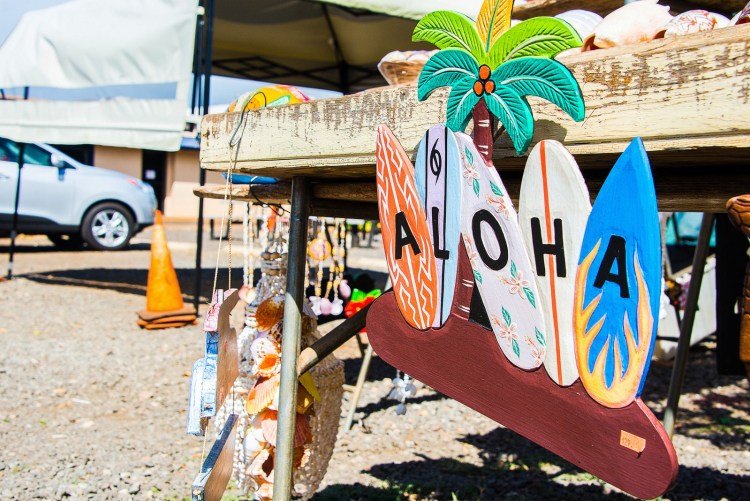
Because of the recent Tiki resurgence, there is also a renewed interest in the Hawaiian language. And, with Southwest Airlines adding direct flights to Hawaii from Los Angeles, it seems the interest in Hawaii and all things Tiki has been felt in the corporate world even affecting recent travel to the Islands.
The Hawaiian language is one of the official languages of Hawaii now, but the language was once banned in schools when Hawaii was first overthrown in the early 1800s. Now more than ever, Tiki lovers are interested in the language and out of respect for our 50th state, more people all over the world want to learn the native tongue.
Bryson Kainoa Embernate is the founder of an online Hawaiian language school that teaches students all over the globe how to speak the Hawaiian language. Just like when visiting another country such as France, citizens appreciate an attempt from visitors to try the language. It’s a sign of respect and courtesy. So when visiting Hawaii and talking with locals, try attempting to speak the local language of the Islands.
“Even in its own land the Hawaiian language is foreign,” Bryson said. He suggests surprising the locals with new language skills during tours, renting boogie boards, or shopping. The best places to speak the language might even be at a local market. Of course not every local you meet will speak the language, but those that do, will appreciate that you took the time to learn some words of the language.
Language is a way to show respect and to communicate with others. When a culture has had their language banned in their own land, imagine how that must have felt. Try to see how that would read in Hawaiian history books and how that settles with the Hawaiian people of today. Of course this was 200 years ago, but think of using the Hawaiian language at least for a few words when you visit Hawaii, with the history of their language in your mind. Given what you know, think of how using the language is a sign of how much you respect their language, their culture, and how much you love the Tiki culture as well.
Here are some basic Hawaiian words and their meanings:
There are more phases and words than the few mentioned above. It’s not hard to google Hawaiian language or check out a small Hawaii word text and phrases guide. If you want to learn the language in an extended way try Bryson Embernate’s online course. Remember, all it takes is a few short words to get to know the local people just a little bit better. This will get you off the beaten path and on to a new adventure in the Hawaiian paradise.
Jan 07 2022

Remembering Sidney Poitier, who passed away today at the age of 94. His 1967 film To Sir, With Love is a prime example of Poitier’s poise and passion as an actor.
Serving as an inspiration to audiences, teachers, and of films to come, To Sir, with Love (1967) is a lesson in walking with grace, honor, and love, against the odds. With wisdom, firmness, and care, Mr. Thackeray teaches a group of kids from the London slums to do exactly that, while also dealing with racial tensions in his own life.
When Mark Thackeray arrives at a London East End school as the new teacher, he discovers the road ahead of him will be quite a challenge after taking one look at his wild class, and after talking with seasoned teachers who try to encourage him to stay before his task has even started. The journey ahead of him is filled with heart, and a real treasure for audiences to watch.
To Sir, With Love was directed by James Clavell, who also directed Shogun and The Great Escape, and was based on his adaptation of the novel by E.R. Braithwaite. It stars the impeccable Sidney Poitier. This is a must-see movie that I bought immediately after first renting it, because I knew I’d want to see it again and again.
The Oscar-winning actor, activist, director, and ambassador was born on February 20, 1927 in Miami, Florida, and passed away this morning, January 7, 2022. Poitier’s most notable films also include Porgy and Bess (1959), A Raisin in the Sun (1961), Lilies of the Field (1963), A Patch of Blue (1965). Guess Who’s Coming to Dinner (1967), and In the Heat of the Night (1967).


