We are used to the words “totem pole” to mean those long poles with carved figures on them. Usually we see totem poles with wings from birds or other animals. But in the Pacific islands, these pole structures are called Tiki poles or Tiki totem poles.
Close-up of a Wooden Tiki, HI | Jess Loiterton
Tiki totem poles from the islands of the Pacific hold a rich history and tradition of the native people. Many house symbols and likenesses of the gods, and many are symbolic of a family or clan. An animal, human, or supernatural being may be carved into the Tiki pole. Usually made of different types of wood, these poles often would indicate family or tribe membership. Placed at the boundary lines of tribal grounds, the Tiki poles often marked where one territory began and another ended.
Early explorers to the islands believed the Tiki pole held a mystic story, but this was not the case. They were not worshipped. They did not protect the village. But more in reality, the Tiki pole expressed an aspect of the relationship with their ancestors.
Therefore, the Tiki totem poles were not religious icons, as some of the first missionaries to the Hawaiian Islands believed. Some of those missionaries destroyed a percentage of the Tiki poles fearing they were objects of worship. And while some did have representations of the gods, they usually contained information about family or tribal history carved in the shapes. The Tiki pole was a way of keeping records.
Tiki Sculptures at the Puʻuhonua o Hōnaunau National Historical Park | Paul Blessington
Some Tiki totem poles were saved by hiding them in caves and by the sheer determination of the native people to preserve their culture and to defend their history. The original Hawaiian Tiki poles are now located on sacred grounds and in museums.
There is also an Alaskan connection to these Tiki totem poles. The Tlingit tribe of the Northwest Shores of Canada and Alaska have totem poles dating farther back in their history. Some of their totem poles are very similar to that of the Tiki poles in Hawaii. The Tlingit Tribe was thought to have traveled to the South Pacific at one time and to have shared customs and skills back and forth with the Hawaiians. Further proof of these travels was presented with the discovery of a Tlingit totem pole found in Hawaii. This totem pole was later returned to Alaska.
There is also a myth about the expression “lowest man on the totem pole” comes from the native people. But this is not true. The actual value of a person or animal was not due to placement on the totem pole.
The only way to truly interpret a totem pole or a Tiki totem pole is to actually know the history of the tribe or native who carved the structure. There are people who have studied and know about the island people.
Ancient Statue in Forest, Hiva Oa, French Polynesia | Kassandre Pedro
If you visit Hawaii, maybe try to skip the usual tourist day and find out more about the state of Hawaii and its beginnings. The background of the Hawaiian people is interesting and will give you more insight about Tiki and Tiki carvings. Tiki Poles have been copied and that’s ok. Maybe think of how you would make a Tiki totem Pole to represent your family.
If you are not a woodworker. Go to your local hardware store and purchase a wooden pole. You can get as creative as you want with the shape. These poles can be found in the porch rails and the wooden post section. Then find a wooden base and strong screws. Attach the post to the base and viola’!
Now, you have a pole to paint with your family symbols or history. You can draw and paint favorite pets, hobbies, family members, or occupations. It’s your history and you can do your totem pole however you choose. Use outdoor paint or spray your work with a protective coat to protect. Place in your garden and you have a family totem pole with your history.
Every year on July 6, rock and roll fans have a reason to celebrate the birthday of one of the genre’s true pioneers. Born in Highland Park, Michigan, in 1925, Bill Haley helped spark a musical revolution that forever changed popular music. Long before rock became a global phenomenon, Haley was blending country, western swing, boogie-woogie, and rhythm and blues into an exciting new sound that inspired generations of musicians.
With Bill Haley & His Comets, Haley created records that were impossible to ignore. Their driving rhythms, lively saxophone solos, and infectious energy encouraged audiences to get up and dance, introducing millions of listeners to what would soon be known as rock and roll.
The Song That Started a Revolution
No discussion of Bill Haley would be complete without Rock Around the Clock. Although it was recorded in 1954, the song became a worldwide sensation after appearing in the opening credits of the 1955 film Blackboard Jungle. Its pounding beat and unforgettable guitar introduction captured the restless spirit of a new generation, becoming the first rock and roll record to top both the U.S. and U.K. charts.
More than just a hit, “Rock Around the Clock” became a cultural milestone. It introduced countless listeners to rock and roll and proved that this energetic new style of music had the power to reach audiences around the globe.
Don’t Forget the B-Side: “Thirteen Women”
Interestingly, “Rock Around the Clock” was originally released as the B-side of another song, Thirteen Women (And Only One Man in Town).
Written by songwriter Dickie Thompson, “Thirteen Women” imagines a humorous post-apocalyptic world in which nuclear devastation leaves only one man alive in a town filled with thirteen women. While the lyrics reflect the era’s fascination with atomic-age themes, Haley’s recording pairs the novelty story with a smooth rhythm-and-blues groove that hinted at the musical direction he was about to take.
Ironically, the song intended to be the featured release was overshadowed almost immediately by its flip side. Today, “Thirteen Women” remains a fascinating piece of rock history—a reminder that one of the most influential songs ever recorded began life as the “other” side of the record.
Beyond “Rock Around the Clock”
Although one song made him famous, Bill Haley’s catalog is filled with recordings that helped define the early years of rock and roll.
Among his biggest hits are:
Shake, Rattle and Roll, a rollicking cover that introduced many white audiences to the rhythm-and-blues classic.
See You Later, Alligator, whose playful lyrics and irresistible groove made it one of the biggest rock hits of the decade.
Burn That Candle, a high-energy rocker packed with youthful excitement.
Razzle-Dazzle, another chart success that showcased Haley’s polished vocal style.
Rip It Up, an energetic interpretation of the rhythm-and-blues favorite.
The Saints Rock ‘n Roll, a spirited adaptation of the traditional hymn that became another international hit.
Rock-a-Beatin’ Boogie, which continued Haley’s streak of dance-floor favorites.
Mambo Rock, blending Latin rhythms with early rock and roll.
Birth of the Boogie, celebrating the musical roots that helped shape rock’s distinctive sound.
Together, these recordings demonstrate that Haley’s success was built on much more than a single classic. His music consistently invited audiences onto the dance floor while helping define the sound of an emerging genre.
A Legacy That Lives On
Although later stars such as Elvis Presley, Chuck Berry, and Little Richard became the most recognizable faces of rock and roll, Bill Haley had already demonstrated that the music could become a worldwide phenomenon. His international tours, chart-topping records, and crossover appeal helped open doors for the artists who followed.
In recognition of his pioneering contributions, Haley was inducted into the Rock and Roll Hall of Fame in 1987 as one of its inaugural members. Today, his influence continues to echo through every guitar-driven anthem, every danceable backbeat, and every musician inspired by the birth of rock and roll.
As we celebrate what would have been Bill Haley’s birthday, it’s worth remembering that his legacy extends far beyond one iconic hit. From the atomic-age storytelling of “Thirteen Women” to the unstoppable energy of “Rock Around the Clock” and a string of enduring classics that followed, Bill Haley helped write the opening chapter of rock and roll history.
Happy Birthday to one of rock’s founding fathers. The clock is still rocking.
Philip Guston, the renowned Canadian-American painter, graphic artist, and muralist, holds an esteemed position in the annals of 20th-century art. Born on this day June 27, 1913 in Montreal, Guston’s life and artistic evolution reflect a profound engagement with the complexities of reality and an unyielding commitment to visual expression. His work, steeped in both abstract expressionism and figuration, traverses the boundaries of convention, echoing a journey that was anything but linear.
His work as a muralist during the Great Depression under the Federal Art Project showcased his remarkable ability to capture socio-political realities. This period of his life also witnessed a gradual transformation from representational art towards abstraction, a shift that would eventually place him alongside the likes of Jackson Pollock and Willem de Kooning in the New York School.
By the late 1960s, however, Guston had begun to break away from the abstract expressionist mold. He returned to figurative painting, creating a series of enigmatic and sometimes disturbing works that incorporated everyday objects and personal symbols. This stylistic pivot was met with initial criticism but has since been recognized for its bold originality and profound impact on the art world.
Philip Guston’s artistic evolution is a testament to his capacity for constant reinvention. His style defies easy categorization, reflecting instead the fluidity of his creative process and his relentless pursuit of authenticity. His legacy continues to inspire artists around the world, underscoring his enduring influence in the realm of visual art.
Pine Island/USA – May 3, 2017: Wooden Tribal Mask Hanging From Rafters Of Local Tiki Hut Bar And Restaurant | Jason Sponseller
Before you hang a Tiki mask in your home, you might want want to learn more about the history of Tiki masks and the chosen mask for your house in particular. With the correct Tiki mask, you might invoke a blessing or serenity, or yikes, fertility!
Deciding whether to decorate with a Tiki mask inside or outside, will help decide a choice of what type of mask you might want to obtain. Tiki masks are usually made of wood and are thought to invoke a mood or a symbol. You might want to channel some strength. There is a mask for that. Or, you may need more peace and continuity in your life. There is a mask for that. There is a Tiki mask face for fun, party time, and just about any occasion you desire.
Tiki masks were originally created within the Polynesian and Hawaiian culture. They are all hand carved and as stated above, represent mood or blessings. Tiki masks can also represent deities. Tiki masks are thought by some to bring fertility or good luck to the household with the mask.
If the Tiki mask represents a god, it is said the mask will instill the household with the traits of the god. A god may fill the home and the family with strength, while another god might fill a household with peace and harmony. Whatever god or trait each mask represented in ancient times, it gave the family and community the comfort and protection against harm. Those who use the Tiki masks believe they can do so still today.
The Tiki mask is carved by hand, out of wood and no two masks are exactly alike. Tiki mask carvers take care to make each mask especially slowly and methodically, with special attention to detail. They take deep pride in their work because this is a recognized artesian trade in the Polynesian culture.
When the first Hawaiian Islanders arrived from Polynesia thousands of years ago, they brought the tribal traditions and religious beliefs of their gods. This was represented by Tiki masks and other symbols. These traditions continued in Hawaii. Modern Tiki masks, as we know them in our current decor, most often derive from the Hawaiian interpretations of the traditional Tiki Masks.
The meanings of Tiki faces are usually in some way linked to a particular god, natural element, or spiritual characteristic of the land. They are not solely for religious purposes. Many times throughout history, Tiki mask heads were placed in the home or in the community areas for specific reasons other than worshipping the gods.
The reasons for constructing the Tiki Masks also include the desire for luck, good fortune, or health of a family member. This could also be for a specific event. It could be for bravery or for victory in a contest or for a quest. A Tiki mask was thought to bring good crops to the land, or as stated previously, to bestow fertility upon a couple hoping for many children. Tiki masks promised tribal people many blessings and provided them with hope, comfort, and continuity of their lives.
the golden hour sunshine hits the living room just right, in a vintage Eichler with modern style furniture and wide windows | JudeAnd
In the annals of modern architecture, few names resonate as profoundly as Joseph Eichler. This visionary architect and real estate developer changed the landscape of mid-20th century California, revolutionizing the way we perceive and experience residential living. With an unwavering commitment to innovation and a keen eye for design, Eichler’s creations transcended mere structures, becoming emblems of a progressive era that celebrated simplicity, functionality, and harmony with nature.
Born on this day June 25, 1900, Joseph Eichler’s journey began in New York City, where he spent his formative years. However, it was in the Golden State of California that his architectural genius truly blossomed. Drawn to the region’s temperate climate and open spaces, Eichler recognized an opportunity to reimagine the traditional concept of suburban living, breaking free from the confines of conventional design.
The impact of Joseph Eichler on modern architecture
Eichler’s homes were not mere structures; they were living canvases that celebrated the seamless integration of indoor and outdoor spaces, fostering a harmonious relationship between human habitation and the natural world.
Through his innovative approach, Eichler challenged the status quo, rejecting the traditional notions of closed-off, compartmentalized living spaces. Instead, he championed open floor plans, abundant natural light, and a seamless connection to the outdoors, creating homes that felt expansive, airy, and deeply connected to their surroundings.
The philosophy behind Joseph Eichler’s designs
At the core of Joseph Eichler’s design philosophy lay a profound appreciation for simplicity, functionality, and a deep respect for the environment. He believed that homes should not merely shelter their inhabitants but also elevate their quality of life, fostering a sense of well-being and connection with nature. Eichler’s designs were guided by the principles of modernism, embracing clean lines, minimalist aesthetics, and the judicious use of materials.
Moreover, Eichler was a firm believer in democratizing good design, making it accessible to the masses. His homes were not intended as exclusive enclaves for the wealthy but rather as affordable and livable spaces that celebrated the beauty of simplicity and practicality. This democratic approach to design was a hallmark of Eichler’s legacy, inspiring generations of architects and homeowners to embrace the notion that quality design should be a right, not a privilege.
Characteristics of Joseph Eichler homes
Joseph Eichler homes are instantly recognizable for their distinctive features and architectural elements. These homes were designed with a keen focus on seamless indoor-outdoor living, achieved through the incorporation of floor-to-ceiling glass walls, sliding glass doors, and expansive patios or courtyards. This emphasis on blurring the boundaries between interior and exterior spaces allowed residents to enjoy the beauty of the California climate while maintaining a sense of openness and connection with nature.
Other notable characteristics of Eichler homes include:
Open Floor Plans: Eichler embraced the concept of open-concept living, eliminating the traditional compartmentalization of spaces and fostering a sense of fluidity and spaciousness.
Post-and-Beam Construction: Utilizing a post-and-beam structural system, Eichler homes featured exposed beams and ceilings, adding a sense of warmth and visual interest to the interiors.
Flat or Low-Pitched Roofs: Departing from the traditional pitched roofs, Eichler homes featured flat or low-pitched roofs, creating a sleek and modern silhouette.
Radiant Floor Heating: Ahead of their time, many Eichler homes incorporated radiant floor heating systems, providing efficient and comfortable heating throughout the living spaces.
Integrated Landscaping: Eichler’s designs seamlessly integrated landscaping elements, blurring the lines between indoor and outdoor spaces and creating a harmonious relationship with the surrounding environment.
Joseph Eichler’s most famous architectural projects
San Rafael, California: Midcentury Eichler home from the street, in the suburb of Lucas Valley-Marinwood near San Francisco | Wirestock Creators
While Joseph Eichler’s impact can be seen in numerous residential communities throughout California, several of his projects stand out as iconic examples of his architectural vision:
Greenmeadow (Palo Alto): Completed in 1954, this community of 237 homes in Palo Alto is widely regarded as one of Eichler’s most significant and influential projects, showcasing his signature style and commitment to modern living.
Fairhaven (Orange County): Developed in the early 1960s, the Fairhaven community in Orange County features over 300 Eichler homes, each meticulously designed to embrace indoor-outdoor living and seamless integration with the surrounding landscape.
Highlands (Cupertino): The Highlands community in Cupertino, consisting of over 700 Eichler homes, is a testament to the architect’s ability to create cohesive and visually stunning residential neighborhoods that prioritized community living and environmental harmony.
Rancho Palma Verde (Fremont): Completed in the late 1960s, this community in Fremont showcased Eichler’s evolution as an architect, incorporating more contemporary elements while still adhering to his core principles of modernism and environmental sensitivity.
The enduring legacy of Joseph Eichler
Joseph Eichler’s legacy extends far beyond the physical structures he created. His unwavering commitment to design excellence, environmental stewardship, and the democratization of good design has profoundly influenced generations of architects, homeowners, and urban planners. Even decades after his passing, Eichler’s homes remain highly sought after, not only for their architectural significance but also for the lifestyle they represent – one that celebrates simplicity, functionality, and harmony with nature.
Eichler’s impact can be seen in the resurgence of interest in mid-century modern design, with homeowners and designers alike drawing inspiration from his iconic creations. His emphasis on open floor plans, indoor-outdoor living, and the seamless integration of nature into the built environment has become a cornerstone of contemporary residential design.
How to identify and preserve Joseph Eichler homes
Mid Century Modern Eichler Home | angie agostino
As the demand for Eichler homes continues to grow, it is crucial to identify and preserve these architectural gems. Recognizing an Eichler home often involves looking for the distinctive features and characteristics outlined earlier, such as flat or low-pitched roofs, post-and-beam construction, and expansive glass walls.
Preserving Eichler homes requires a delicate balance between maintaining their original integrity and adapting them to modern living standards. Many homeowners and preservation organizations have undertaken meticulous restoration projects, ensuring that the homes retain their authentic character while incorporating necessary updates and improvements.
Additionally, several communities have established architectural review boards and guidelines to protect the integrity of Eichler neighborhoods, ensuring that any modifications or additions are in keeping with the original design principles.If you’re interested in exploring the world of Joseph Eichler homes, consider joining a local Eichler enthusiast group or attending one of the many tours and events organized by preservation societies. These organizations can provide invaluable insights, resources, and guidance on appreciating and preserving these architectural treasures.
The influence of Joseph Eichler on contemporary architecture
Joseph Eichler’s influence on contemporary architecture cannot be overstated. His pioneering vision and unwavering commitment to design excellence have inspired countless architects and designers to push the boundaries of residential living. Today, many contemporary homes incorporate elements that echo Eichler’s principles, such as open floor plans, seamless indoor-outdoor connections, and a deep respect for the surrounding environment.
Furthermore, Eichler’s emphasis on democratizing good design has resonated with a new generation of architects and homeowners who seek to create living spaces that prioritize functionality, sustainability, and accessibility. Contemporary architects have built upon Eichler’s legacy, incorporating innovative materials, technologies, and design strategies to create homes that are both aesthetically pleasing and environmentally responsible.
Exploring the Joseph Eichler community
Sacramento, CA: Aerial view of Eichler home exterior | Cassiohabib
Beyond the physical structures, Joseph Eichler’s legacy has fostered a vibrant and passionate community of enthusiasts, preservationists, and admirers. These individuals come together to celebrate Eichler’s vision, share their love for his creations, and ensure that his architectural legacy is preserved for future generations.
Eichler communities can be found throughout California, with active groups organizing tours, events, and educational initiatives. These gatherings provide opportunities for homeowners, architects, and enthusiasts to connect, exchange ideas, and gain a deeper appreciation for the significance of Eichler’s work.
Additionally, online forums, social media groups, and dedicated websites serve as platforms for Eichler enthusiasts to share knowledge, discuss preservation efforts, and celebrate the enduring appeal of these iconic homes.
Joseph Eichler’s contribution to modern living
Joseph Eichler’s impact on modern living extends far beyond the realm of architecture. His visionary approach to design challenged traditional norms and paved the way for a new era of residential living that prioritized simplicity, functionality, and harmony with nature. Eichler’s homes were not merely structures; they were expressions of a progressive philosophy that sought to elevate the human experience by fostering a deeper connection with the natural world.
Today, Eichler’s legacy continues to inspire architects, homeowners, and urban planners alike, serving as a powerful reminder of the transformative power of design. His commitment to democratizing good design and creating livable, sustainable spaces has influenced the built environment, shaping the way we perceive and experience residential living.
As we look to the future, Joseph Eichler’s pioneering spirit and unwavering dedication to innovation will undoubtedly continue to influence and inspire generations to come, ensuring that his vision of harmonious, modern living remains a guiding force in the ever-evolving landscape of architecture and design.
Robert Henri, a prominent American painter and teacher, was indeed the force behind the brushstrokes that transformed the realm of art during the early 20th century. Born on this day June 24, 1865 in Cincinnati, Ohio, Henri carved a niche for himself in the world of art and emerged as a leading figure of the Ashcan School of American realism. His work was recognized for its bold and vigorous style, and its depiction of everyday scenes from urban life.
Henri’s artistic skills were not restricted to his paintings alone. He was equally celebrated as an influential teacher who mentored several aspiring artists. In fact, his pedagogical approach was as radical as his art. He advocated for the depiction of real life in its raw form rather than romanticized or idealized versions, a philosophy that resonated strongly with his students and followers.
Despite facing criticism from conservative circles, Robert Henri remained unyielding in his commitment to realism in art. He believed that art should reflect life as it is, not as it should be. This conviction led him to produce a body of work that was characterized by its truthful representation and humanistic approach.
A maverick in his own right, Robert Henri was not just a painter but a visionary who saw art in everyday life. His brushstrokes were not mere applications of paint on canvas but a powerful commentary on the societal norms and conventions of his time. They were a reflection of his understanding of the world, painted with an honesty that was both refreshing and radical.
Robert Henri’s contribution to the world of art extends far beyond his stunning paintings. The man behind the brushstrokes was an innovator, an educator, and above all, a staunch believer in the power of realism in art. Today, his legacy continues to inspire artists around the globe to view their surroundings with a critical eye and depict them with unadulterated honesty.
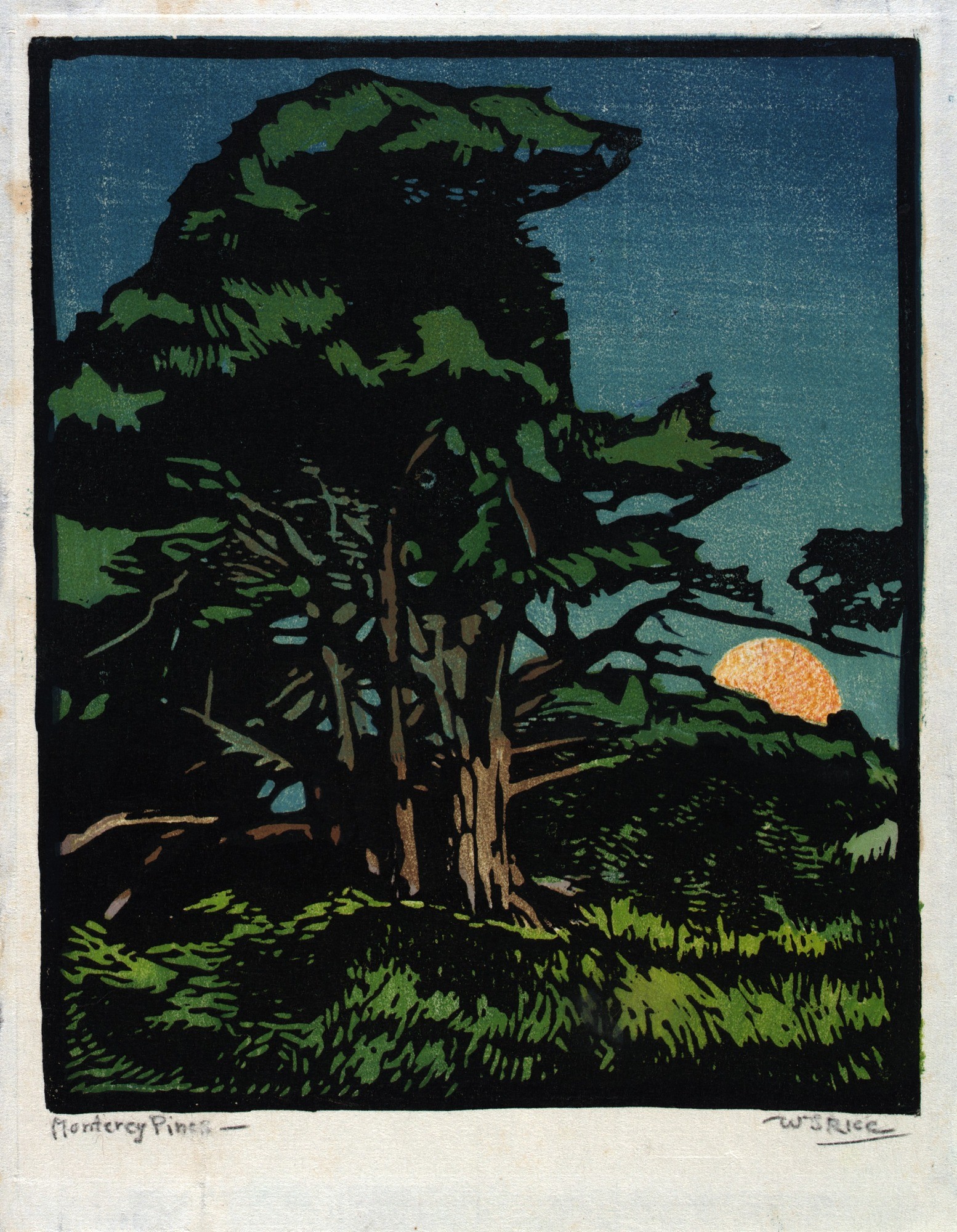
William S. Rice was a prominent figure in the California Arts and Crafts Movement during the early 20th century, an era defined by a desire to preserve individual handcraftsmanship against the rapid industrialization of the time. Born on this day June 23, 1873 in Pennsylvania, Rice moved to California in 1900 and quickly became an integral part of the burgeoning artistic community, contributing significantly to the region’s distinctive take on the Arts and Crafts Movement.
Rice was not merely an artist; he was a master craftsman who believed in the intrinsic value of manual labor. His medium of choice was woodblock prints – a technique that required not just creative vision but also meticulous craftsmanship. Woodblock printing is an art form that requires carving an image onto a wooden block, which is then inked and pressed onto paper to create a print. This process appealed to Rice because it allowed him to maintain control over every aspect of his work, from conception to final execution.
William S. Rice’s woodblock prints were often characterized by their depictions of California’s natural landscapes, capturing the unique beauty of the region’s flora and fauna. His work embodied the principles of the Arts and Crafts Movement, merging art with function and emphasizing the importance of design in everyday life. His prints were not just beautiful pieces of art but were often used in practical applications such as book illustrations and promotional posters.
Rice’s dedication to his craft and his contribution to the artistic community made him a central figure in California’s Arts and Crafts Movement. However, his influence extended beyond his immediate surroundings. Through his work, Rice helped to redefine traditional artistic techniques and contributed to a broader understanding of what constitutes art. His legacy continues to inspire contemporary artists, underscoring the enduring impact of the Arts and Crafts Movement.
Born on this day June 21, 1944 in Fortis Green, London, Ray Davies, a name synonymous with classic British rock, is renowned for his timeless songwriting skills. His unique storytelling ability, combined with his knack for capturing the quintessential British essence in his lyrics, has cemented his position as one of the greatest musicians of his generation.
From capturing the melancholic beauty of a London sunset in ‘Waterloo Sunset’ to the compelling narrative of ‘Lola,’ Davies has demonstrated an uncanny ability to traverse a myriad of themes and emotions in his songs. His songs have not only resonated with listeners worldwide but have also stood the test of time, often serving as a social commentary that reflects the zeitgeist of the era they were composed in.
In ‘Waterloo Sunset,’ Davies beautifully encapsulates the charm of London and its people, painting a vivid picture through his lyrical storytelling that continues to enchant listeners even today. On the other hand, ‘Lola’ challenged societal norms and sparked conversations, displaying Davies’s boldness in addressing taboo topics through his music.
Ray Davies’s songs are characterized by their intricate melodies, poetic lyrics, and profound emotional depth. His ability to create such timeless classics is a testament to his exceptional talent as a songwriter. Even decades after their release, his songs continue to captivate audiences, inspiring countless musicians and songwriters along the way.
The enduring appeal of Ray Davies’s songs is a tribute to his extraordinary songwriting skills that transcend time and genre constraints. His nuanced storytelling, coupled with a distinctive musical style, has resulted in a rich body of work that continues to be celebrated and revered in contemporary music culture. As we revisit classics like ‘Waterloo Sunset’ and ‘Lola,’ we are reminded of Ray Davies’s invaluable contribution to music and his unparalleled ability to craft songs that resonate deeply with listeners across generations.
Dingbat apartments, a unique architectural phenomenon that emerged in the mid-20th century, are a distinctive style of low-rise, multi-unit residential buildings. These quirky structures are characterized by their eccentric and sometimes whimsical designs, often incorporating elements of modernism and futurism.
Dingbat apartments are typically two or three stories tall, with each unit having a separate entrance from the exterior. The name “dingbat,” coined by Francis Ventre, is derived from the decorative elements or ornaments that adorn the buildings, resembling the typographic symbols known as dingbats.
These apartments were primarily constructed in California and other parts of the American West, catering to the growing demand for affordable housing during the post-World War II era.
The history and significance of dingbat apartments
The origins of dingbat apartments can be traced back to the early 20th century, when architects and builders sought to create affordable and efficient housing solutions for the rapidly growing urban populations. However, it wasn’t until the mid-1940s and 1950s that the dingbat style truly flourished, becoming a quintessential part of the Southern California landscape.
During this period, the demand for housing skyrocketed due to the influx of migrants and the post-war economic boom. Dingbat apartments offered a practical and cost-effective solution, allowing developers to maximize the use of limited urban land while providing residents with a unique living experience.
Beyond their functional purpose, dingbat apartments also reflected the cultural and social shifts of the time. They embodied the optimism and futuristic ideals of the atomic age, with their bold designs and innovative use of materials.
The architectural features of dingbat apartments
Dingbat apartments are known for their distinctive architectural features, which set them apart from traditional apartment buildings. Some of the defining characteristics include:
Ornamental Facades: The most striking aspect of dingbat apartments is their ornamental facades, adorned with various decorative elements such as geometric shapes, stylized lettering, and abstract patterns. These decorative features, often made of metal or ceramic, lend a unique and playful character to the buildings.
Flat Roofs: Dingbat apartments typically feature flat roofs, a departure from the pitched roofs commonly seen in residential architecture. This design choice was influenced by the modernist movement and allowed for a more efficient use of space.
Parking Integration: One of the practical aspects of dingbat apartments is the integration of parking spaces directly beneath or adjacent to the living units. This design feature catered to the growing reliance on automobiles in the post-war era.
Outdoor Living Spaces: Many dingbat apartments incorporate outdoor living spaces, such as balconies or patios, allowing residents to enjoy the mild Southern California climate.
Modular Construction: Dingbat apartments were often constructed using modular or prefabricated components, making them relatively inexpensive and efficient to build.
Living in a dingbat apartment: pros and cons
Living in a dingbat apartment offers a unique experience with its own set of advantages and challenges:
Pros:
Affordable Housing: Dingbat apartments were designed to provide affordable housing options, making them accessible to a wide range of residents.
Distinctive Character: The quirky and eclectic designs of dingbat apartments lend a sense of individuality and charm to the living experience.
Outdoor Spaces: The inclusion of outdoor living areas, such as balconies or patios, allows residents to enjoy the outdoors and take advantage of the pleasant weather.
Convenient Parking: The integrated parking spaces make it convenient for residents who own vehicles, eliminating the need to search for street parking.
Cons:
Limited Space: Dingbat apartments are typically smaller in size compared to traditional apartments, which can feel cramped for some residents.
Noise Concerns: With separate entrances for each unit and close proximity to neighbors, noise can be a potential issue in dingbat apartments.
Aging Infrastructure: Many dingbat apartments were built several decades ago, and some may require renovations or updates to meet modern living standards.
Limited Amenities: Unlike modern apartment complexes, dingbat apartments often lack shared amenities such as pools, gyms, or community spaces.
Dingbat apartments in popular culture
Despite their humble origins, dingbat apartments have captured the imagination of artists, filmmakers, and pop culture enthusiasts. These unique structures have been featured in various movies, TV shows, and artworks, showcasing their distinctive charm and quirky appeal.
In the realm of cinema, dingbat apartments have served as backdrops for numerous films, including the critically acclaimed Boogie Nights and the cult classic Slums of Beverly Hills. These movies not only showcased the distinctive architecture but also captured the essence of life in these unique residential spaces.
Beyond the screen, dingbat apartments have also inspired artists and photographers, who have documented and celebrated their quirky designs through various mediums. From photography exhibitions to street art installations, these apartments have become canvases for creative expression and a celebration of their unique place in urban landscapes.
The impact of the atomic age on dingbat apartments
A dingbat apartment building in Southern California | By Barmysot – Own work, CC BY-SA 3.0
The emergence of dingbat apartments coincided with the atomic age, a period marked by technological advancements, scientific discoveries, and a fascination with futuristic designs. This cultural and historical context had a profound influence on the architectural style and aesthetics of dingbat apartments.
During the post-World War II era, the atomic age ushered in a sense of optimism and a desire for modernity. Architects and designers sought to incorporate elements that reflected this newfound fascination with science and technology. Dingbat apartments, with their bold geometric shapes, abstract patterns, and futuristic motifs, embodied this spirit of innovation and progress.
The use of materials like metal and ceramic in the decorative elements of dingbat apartments was also influenced by the atomic age. These materials were seen as modern and cutting-edge, aligning with the era’s emphasis on advanced materials and industrial design.
Furthermore, the flat roofs and modular construction techniques employed in dingbat apartments were a departure from traditional residential architecture, reflecting the desire for efficiency and functionality that characterized the atomic age.
The preservation and revitalization of dingbat apartments
As dingbat apartments age and face the threat of demolition or redevelopment, efforts are underway to preserve and revitalize these unique architectural gems. Recognizing their cultural and historical significance, various organizations and communities have rallied to protect and celebrate these distinctive structures.
One notable initiative is the “Dingbat 2.0” project, which aims to raise awareness about the importance of preserving dingbat apartments and promoting their adaptive reuse. This project encourages the renovation and repurposing of these buildings, ensuring that their unique character is preserved while meeting modern living standards.
In cities like Los Angeles, where dingbat apartments are an integral part of the urban landscape, local preservation groups and neighborhood associations have played a crucial role in advocating for the protection of these structures. They work closely with city officials, developers, and property owners to find creative solutions for preserving and revitalizing dingbat apartments.
Beyond preservation efforts, there is also a growing trend of revitalizing and modernizing dingbat apartments. Developers and architects are exploring ways to update these buildings with contemporary amenities and sustainable features while retaining their distinctive charm. This approach not only preserves the architectural heritage but also ensures that dingbat apartments remain relevant and desirable in today’s housing market.
Exploring dingbat apartments in different cities
While dingbat apartments are most closely associated with Southern California, particularly Los Angeles and its surrounding areas, these unique structures can be found in various cities across the United States and beyond. Each location offers its own distinct interpretation of the dingbat aesthetic, reflecting local architectural influences and cultural contexts.
Los Angeles, California: Considered the epicenter of dingbat apartment design, Los Angeles boasts numerous neighborhoods where these structures can be found. From the iconic examples in West Hollywood to the vibrant dingbat-lined streets of Silver Lake and Echo Park, Los Angeles offers a rich tapestry of dingbat architecture.
San Francisco, California: While not as prevalent as in Los Angeles, dingbat apartments can be found in various neighborhoods of San Francisco, particularly in areas like the Richmond District and the Sunset District. These structures often blend elements of the dingbat style with the city’s distinct architectural heritage.
Phoenix, Arizona: In the desert city of Phoenix, dingbat apartments emerged as a practical solution for affordable housing during the post-war population boom. These structures can be found in neighborhoods like Maryvale and Sunnyslope, featuring colorful facades and unique desert-inspired designs.
Miami, Florida: The vibrant city of Miami is home to its own interpretation of dingbat apartments, often referred to as “Miami Modern” or “MiMo.” These structures combine elements of the dingbat style with tropical and Art Deco influences, creating a distinctive architectural aesthetic.
Vancouver, Canada: Across the border in Vancouver, dingbat apartments can be found in neighborhoods like Kitsilano and Mount Pleasant. These structures reflect the city’s unique blend of architectural styles, with dingbat elements integrated into the local design vernacular.
Exploring dingbat apartments in different cities offers a glimpse into the diverse interpretations of this architectural phenomenon, showcasing how local influences and cultural contexts have shaped the evolution of this unique residential style.
Embracing the charm of dingbat apartments
Dingbat apartments, with their quirky designs and distinctive charm, have left an indelible mark on the urban landscapes of cities across the United States and beyond. These unique structures represent a fascinating chapter in architectural history, reflecting the optimism, innovation, and cultural shifts of the post-war era.
While dingbat apartments may have been born out of necessity and affordability, they have transcended their utilitarian origins to become beloved icons of mid-century design. Their ornamental facades, geometric shapes, and playful ornamentation continue to capture the imagination of architects, artists, and residents alike.
As we look towards the future of urban living, it is crucial to recognize the importance of preserving and revitalizing these architectural gems. By embracing the charm of dingbat apartments, we not only celebrate our architectural heritage but also inspire new generations of designers to push the boundaries of creativity and innovation in residential design.
Whether you’re a resident seeking a unique living experience, an architect inspired by the dingbat aesthetic, or a curious traveler exploring urban landscapes, dingbat apartments offer a captivating glimpse into a bygone era while remaining a vibrant part of our modern cities.
Tiki Statues in Bora Bora Island in French Polynesia | Andrea Izzotti
When my sister went to Hawaii years ago, she brought me back a small Tiki wooden carving. The perfect gift from Hawaii, I thought. Every time I look at this carving, I think of Hawaii and the island culture. Of course I also think of my sister! Tiki statues, the totem poles, masks and all the carvings are a great insight into the Hawaiian culture and creativity as well as some of the religious beliefs involved in some of the creations.
Tiki carvings have similar characteristics in each statue, even though every hand carved statue is very different. Each face of a Tiki carving has a large mouth. Whether the mouth is smiling or frowning, the mouth is very pronounced. The eyes are sometimes extremely popped open or very squeezed shut.
Three beautiful wooden Tiki sculptures in the Pu’uhonua o Honaunau National Park, Big Island, Hawaii | Marlon Trottmann
The Tiki statues were first carved by the Maori tribe to use as boundary markers for sacred areas. The statues originally represented one of the four gods in Hawaiian culture. The four gods were Ku, Kane, Lono, and Kanaloa. Kane was considered to be the god of the universe and the creator. He rules the natural world. A statue made to look like Kane might have an almost human-like body in appearance.
Ku is thought to be the god of war. If you see a Tiki statue with an open mouth, it is most likely a representation of Ku. The open mouth symbolizes the idea he is devouring his enemies. Lono is the god of rain, fertility, music and peace. Often the statue made for Lono has a large belly for the fertility aspect. Kanaloa is the god of the sea and you might see a statue for this god with squid-like dreadlocks.
Tiki statues became popular in modern culture as the Tiki craze began to catch on in the 1930s. Several Tiki-themed restaurants opened up on the west coast and in Florida during that decade. Tiki statues that are authentic are more expensive and are not mass produced. Look for a unique statue that is being carved by hand as you are shopping in Hawaii.
Ancient Polynesian style tiki wooden carvings greet visitors to Ki’i Pu’uhonua O Honaunau National Park on the Big Island of Hawaii. | David A Litman
Tiki carvings are used inside and outside of homes for more than just decorating. Many believe the large mouths are used to frighten away evil spirits, so they keep Tiki statues toward the entrance of their home for protection.
The Ki’I statue at Pu’uhonua o Honaunau National Historical Park is one of the most visited Tiki Statues in Hawaii. It is also one of the largest. The Tiki statue is located at the entrance of a recreated Maori village. The statue is of Tiki. Tike was the first human, which tells the story of how people began here on earth.
Three wooden Polynesian tiki carvings on Oahu, Hawaii | Leigh Anne Meeks
Tiki Masks and totem poles are a lot like Tiki statue carvings. They too have carvings on them that represent gods or symbols and may be used for protection. The masks and/or totem poles are each carved with specific features to represent the identity of its meaning; strength, courage, health, etc. A fully carved mask might take on the spirit and personality of its god or trait, becoming the presence of the specific knowledge and power. While a fully carved totem pole has different sections to represent each identity or feature.
Tikis at Puuhonua o Honaunau National Historical Park on the Big Island in Hawaii
Tiki carvings are an older art form. Every hand carved Tiki is unique. Used both for spiritual direction, protection, and decoration, the Tiki carvings are synonymous with Hawaiian culture and all things Tiki!